Prepare Dye:
- Combine 2 cups water and your chosen dye ingredient (e.g., purple cabbage, onion skins, kale, spinach, or loose tea) in a saucepan.
- Bring to a boil over medium-high heat.
- Reduce heat to low, cover, and simmer for 15-30 minutes until the color is a few shades darker than desired. Test the color by dripping a bit onto a white dish.
Strain and Cool:
- Remove from heat and let cool to room temperature.
- Strain through a fine-mesh strainer into another saucepan or bowl, pressing solids to extract liquid. Discard solids.
- Measure strained liquid and add 1 tablespoon distilled white vinegar per cup of liquid. Stir to combine.
Dye Eggs:
-
- Place 6 room-temperature, hard-boiled eggs in a round mold or container. Pour cooled dye over eggs, ensuring they are fully submerged.
- Refrigerate until desired color is reached, from a few hours to overnight. For more vibrant colors, repeat soaking and drying process.
- Finish Eggs:
- Once dyed, allow eggs to dry naturally. When dried, pat eggs with a paper towel.
- Rub some neutral oil onto each egg and polish with a paper towel.
- Refrigerate until ready to use.
Tips for Refrigeration and Storage
- Refrigerate Promptly: After dyeing, place the eggs back in the refrigerator as soon as possible to prevent bacterial growth.
- Use a Container: Store the eggs in a covered container or an egg carton to protect them from absorbing odors from other foods in the fridge.
- Avoid Cracks: Handle the eggs gently to avoid cracks, as cracked eggs can spoil more quickly.
- Label and Date: If you have multiple batches of dyed eggs, label them with the date they were dyed to keep track of their freshness.
- Consume Within a Week: Hard-boiled eggs, whether dyed or not, should be consumed within one week for optimal freshness and safety.
- Keep Cool: If you plan to display the eggs, keep them out of direct sunlight and in a cool place. When not on display, return them to the refrigerator.
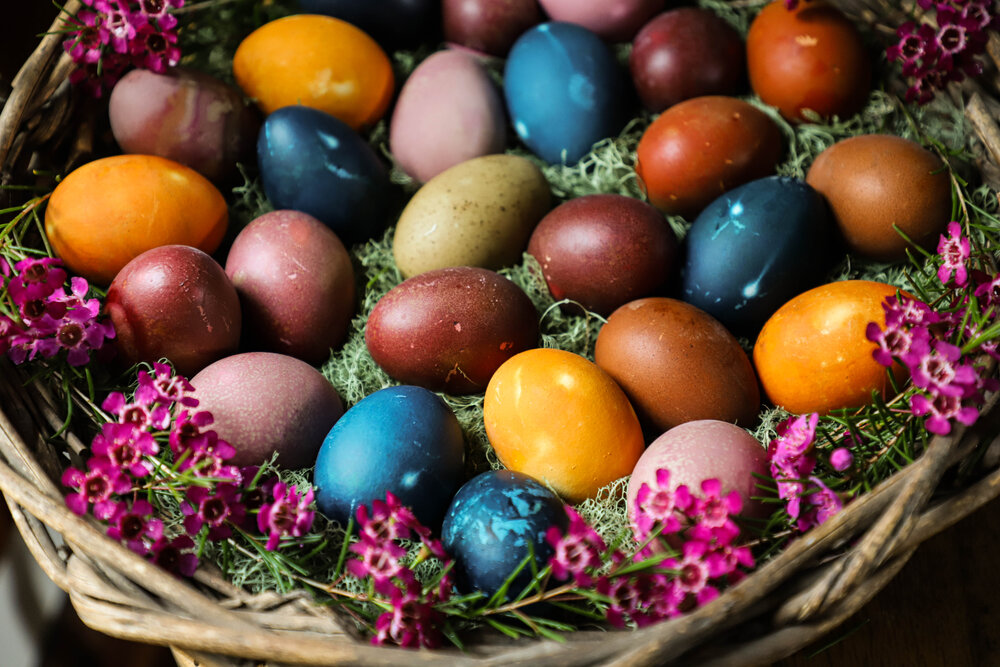
Experiment with different natural ingredients to create a variety of colors. These eggs are safe to eat!
BONTIP: Use natural ingredients like vegetables, fruits, and teas to create beautiful, safe-to-eat dyed Easter eggs. Experiment with different ingredients to achieve a variety of colors.