Table of Contents
- What You’ll Need Before You Start
- Baking Soda and Vinegar for Burnt Pans: The Go-To Method
- How to Clean a Burnt Stainless Steel Pan
- Cleaning Burnt Nonstick Pans Without Ruining the Coating
- How to Clean Burnt Cast Iron Pans
- Troubleshooting: When Standard Methods Fail to Clean Burnt Pans
- Prevention: How to Stop Pans from Burning in the First Place
- Conclusion
Last Updated: August 8, 2026
What You’ll Need Before You Start
Knowing how to clean burnt pans saves money, extends cookware life, and prevents frustrating scrubbing sessions. The most common mistake isn’t the cleaning method itself, it’s using the wrong tool for the wrong material.
Before you start, gather these supplies:
- Baking soda
- White vinegar
- Dish soap
- Aluminum foil (for stainless steel)
- A non-abrasive sponge or soft cloth
- A stiff-bristled brush (for cast iron only)
- Water
- A wooden spoon or silicone spatula
The pan material determines everything. Using the wrong method on the wrong surface, say, scrubbing nonstick with aluminum foil, causes more damage than the burnt residue itself. Identify what you’re working with: stainless steel, nonstick, cast iron, or enamel-coated. Each reacts differently to heat, acid, and abrasion.
Let the pan cool completely before cleaning. Thermal shock from cold water into a hot pan can warp stainless steel and crack enamel.
| Pan Material | Safe Cleaners | Avoid | Soak Time |
|---|---|---|---|
| Stainless Steel | Baking soda, vinegar, aluminum foil | Steel wool on polished surfaces | 15-30 min |
| Nonstick | Dish soap, baking soda paste (gentle) | Abrasive pads, vinegar boiling | 10-15 min |
| Cast Iron | Salt, mild soap (minimal), oil | Prolonged soaking, vinegar | 5 min max |
| Enamel-Coated | Baking soda paste, dish soap | Harsh abrasives, steel wool | 20-30 min |
Baking Soda and Vinegar for Burnt Pans: The Go-To Method
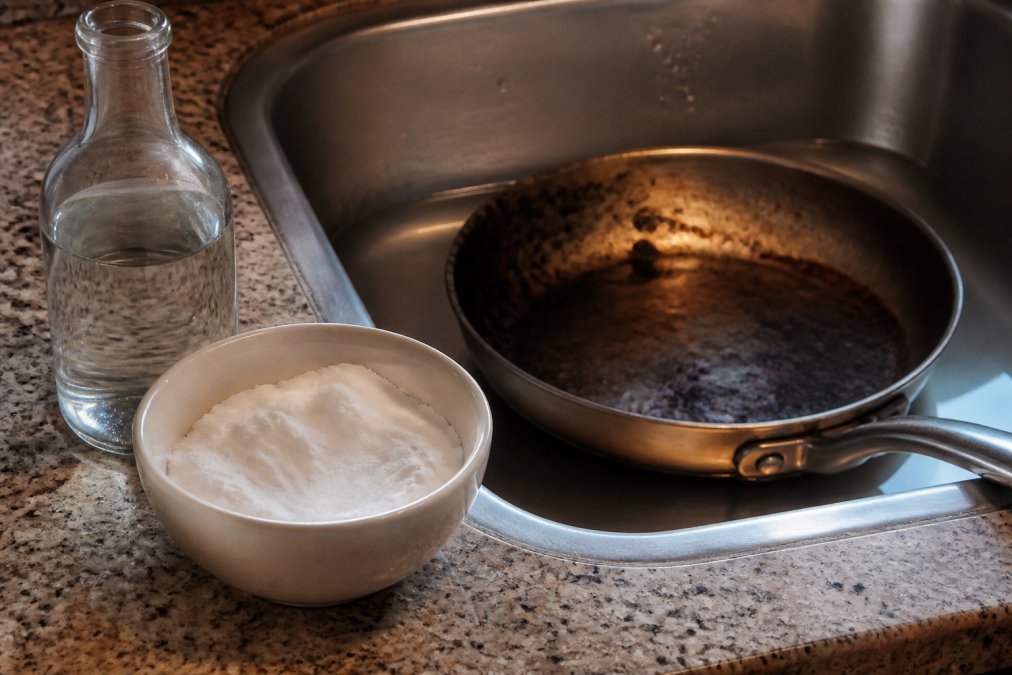
Baking soda and vinegar is the most effective all-purpose approach for carbonized food and scorched residue. Baking soda is a mild abrasive and base; vinegar is a weak acid. Together, they create a fizzing reaction that lifts burnt-on deposits without harsh chemicals. This combination works well on stainless steel and enamel-coated pans, and is safe for occasional use on nonstick when applied gently.
The Baking Soda Paste Method
The baking soda paste method works best for burnt-on residue on the bottom and sides:
- Let the pan cool to room temperature.
- Rinse out loose debris with warm water.
- Sprinkle baking soda over burnt areas.
- Add just enough water to form a thick paste, similar to toothpaste.
- Let the paste sit for 15 to 30 minutes (up to an hour for heavy carbonization).
- Scrub with a non-abrasive sponge using circular motions.
- Rinse thoroughly and repeat if needed.
The soak time does most of the work. Rushing to scrubbing without letting the paste penetrate is the most common mistake.
For stubborn carbonized spots, add a few drops of dish soap to your baking soda paste. The degreasing action helps break down the oily residue bonding burnt food to the pan.
The Vinegar and Water Boiling Technique
This method works well for burnt residue inside the pan. Avoid it on nonstick pans, as prolonged heat and acidity degrade the coating.
- Pour equal parts white vinegar and water into the pan, enough to cover the burnt area.
- Bring the mixture to a gentle simmer (not a rolling boil).
- Simmer for 5 to 10 minutes. Burnt deposits will begin to lift and float.
- Remove from heat and let cool.
- Pour out the liquid and scrub with a non-abrasive sponge.
- Follow up with the baking soda paste method for remaining residue.
The deglazing effect of simmering liquid releases what’s bonded to the surface, the same principle chefs use when deglazing after searing.
How to Clean a Burnt Stainless Steel Pan
Stainless steel is forgiving. Cleaning burnt stainless steel pans rarely requires anything beyond kitchen staples. According to the American Cleaning Institute’s guidance on cookware care, non-abrasive cleaning agents are recommended for most metal cookware to preserve surface integrity.
Aluminum Foil Scrubbing Method for Stainless Steel
The aluminum foil method turns kitchen foil into an effective scrubbing pad, abrasive enough to remove carbon without scratching polished stainless surfaces.
- Crumple aluminum foil into a golf-ball-sized ball.
- Add dish soap or baking soda directly to the burnt pan surface.
- Scrub scorched areas using the foil ball in firm circular motions.
- Rinse and repeat as needed.
- Dry immediately to prevent water spots.
Aluminum is slightly softer than stainless steel, so it abrades the carbonized layer without gouging the pan surface. For thick buildup on the pan bottom, this is often the fastest approach.
Do not use aluminum foil on nonstick pan interiors or enamel coatings. It will scratch and permanently damage the finish. Reserve it strictly for stainless steel.
Cleaning Burnt Nonstick Pans Without Ruining the Coating
Nonstick pans require a different approach. The goal shifts from aggressive removal to gentle coaxing, because the nonstick coating is the most fragile part. Reaching for abrasive tools destroys the surface in minutes.
Follow these steps:
- Let the pan cool completely before adding water.
- Fill with warm water and add a few drops of dish soap.
- Soak for 10 to 15 minutes to loosen burnt residue.
- Use a soft non-abrasive sponge to gently wipe away deposits.
- For stubborn spots, make a thin baking soda paste and apply gently with your fingertip. Let it sit 5 minutes, then wipe.
- Rinse thoroughly and dry with a soft towel.
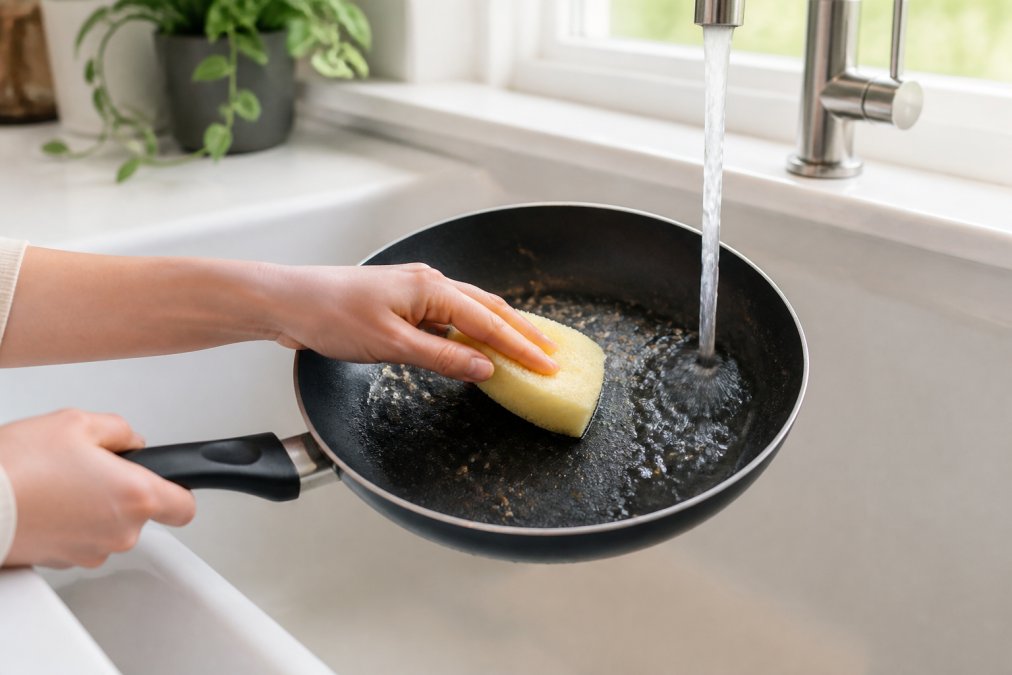
Never use the vinegar boiling technique on nonstick. Prolonged acidic exposure at high heat accelerates coating breakdown. Avoid metal utensils, steel wool, and rough sponge sides.
If your nonstick pan shows visible scratches, peeling, or flaking after cleaning, replace it. A damaged coating means the surface is no longer intact.
As noted in the FDA’s guidance on cookware materials and safety, maintaining nonstick coating integrity through proper care is important for both performance and longevity.
How to Clean Burnt Cast Iron Pans
Cast iron operates by different rules. The seasoning, the polymerized oil layer built up over years, makes cast iron nonstick and rust-resistant. Aggressive cleaning strips that seasoning away. The goal is removing burnt food without touching the seasoning underneath.
- While the pan is still slightly warm, add a tablespoon of coarse salt.
- Use a paper towel or stiff-bristled brush to scrub salt against burnt residue. Salt acts as a gentle abrasive without damaging seasoning.
- For stubborn burnt food, add a small amount of water and heat briefly on the stove (under 5 minutes).
- Rinse quickly with warm water. Avoid prolonged soaking; cast iron rusts fast.
- Dry immediately and thoroughly on the stove over low heat.
- Apply a thin layer of cooking oil to the interior while warm, then wipe away excess.
Soak time for cast iron should be measured in seconds, not minutes. Prolonged submersion undoes years of careful seasoning. Keep vinegar away from cast iron entirely, acidic solutions strip seasoning aggressively.
Troubleshooting: When Standard Methods Fail to Clean Burnt Pans
Standard methods sometimes fail on heavily burnt pans. Here’s how to troubleshoot:
Problem: Thick, black carbon buildup that paste won’t penetrate
Combine both methods in sequence. Use the vinegar and water boiling technique first to soften the carbonized layer, then immediately apply baking soda paste while the surface is warm. Heat opens the pores of the metal slightly, allowing deeper penetration.
Problem: Burnt oil residue on the pan bottom
Burnt oil polymerizes at high heat and bonds tightly to metal. Apply a thick baking soda paste to the pan bottom and cover with a damp cloth. Leave overnight. Extended soak time makes a significant difference with polymerized grease.
Problem: Discoloration that won’t scrub away
Rainbow-colored heat stains on stainless steel are oxidation, not burnt food. They’re cosmetic and harmless. A paste of cream of tartar and water removes them without abrasion.
Problem: Repeated burning in the same spot
This is usually a heat distribution issue. Thin-bottomed pans develop hot spots that scorch food repeatedly. According to Cook’s Illustrated testing methodology for cookware, pan thickness and material composition are primary factors in heat distribution evenness.
Prevention: How to Stop Pans from Burning in the First Place
The best approach to cleaning burnt pans is needing to do it less often.
Use the right heat level. Most home cooks use too much heat. Stainless steel and cast iron retain heat efficiently and don’t need high flames. Start lower than you think necessary and adjust up.
Preheat properly before adding food. Adding food to a cold stainless steel pan causes stuck, burnt residue. Let the pan heat for a minute or two, then add oil, then food.
Don’t leave pans unattended on high heat. A pan on medium-high can go from cooking to carbonized in under two minutes.
Clean promptly after cooking. Fresh burnt residue is significantly easier to remove than residue sitting for 12 hours.
Match your pan to the task. Using a thin pan for high-heat searing or nonstick for very high heat creates conditions where burning is almost inevitable.
At bon COOK, our professional-grade cookware is designed with even heat distribution, which means less hot-spotting, less scorching, and fewer burnt pans to deal with. If you find yourself cleaning burnt residue regularly, the pan itself may be part of the problem.
Conclusion
Burnt pans don’t have to mean damaged cookware or hours of scrubbing. The right method depends on material: baking soda paste and vinegar boiling for stainless steel and enamel, gentle soap and soft sponges for nonstick, salt and oil for cast iron. When standard methods fail, combining techniques and extending soak time usually works.
For home cooks who want to spend less time cleaning and more time cooking, cookware quality matters. bon COOK’s professional-grade pans are built for even heat distribution and easy maintenance, backed by live virtual cooking classes that help you build skills to avoid burning. Explore bon COOK’s cookware collection and cook with more confidence every time you step into the kitchen.
Frequently Asked Questions
Can burnt pans actually be saved, or should I just replace them?
Most burnt pans can be saved with the right method. Carbonized food and scorched residue on stainless steel and cast iron respond well to baking soda, vinegar, or soaking techniques. Nonstick pans are trickier: if the nonstick coating is peeling or deeply scratched, replacement is the safer choice. But surface-level burnt-on stains on nonstick cookware can often be removed gently without damaging the coating, extending the pan's useful life considerably.
Does salt, baking soda, and vinegar actually clean burnt pans?
Yes, and the combination works because each ingredient plays a different role. Baking soda is a mild abrasive that lifts carbonized food without scratching most surfaces. Vinegar's acidity breaks down mineral deposits and loosens burnt-on residue. Salt adds extra scrubbing texture for stubborn stains. Together, they create a natural degreasing and cleaning reaction. This approach works best on stainless steel and enamel pans; avoid vinegar on cast iron, as it can strip the seasoning.
Is it safe to use steel wool on nonstick pans?
No. Steel wool and other abrasive scrubbing pads will scratch and permanently damage a nonstick coating, making the pan unsafe to cook with and far less effective. Always use a soft non-abrasive sponge or cloth on nonstick surfaces. For stubborn burnt-on food, soak the pan in warm soapy water for 20 to 30 minutes before gently wiping clean. Preserving the nonstick coating depends entirely on gentle cleaning every time.
How do I get the brown residue off the bottom of my pans?
Brown buildup on pan bottoms is usually polymerized grease and carbonized food. For stainless steel pan bottoms, a baking soda paste left on for 15 to 20 minutes, then scrubbed with a non-scratch pad, removes most discoloration. For tougher buildup, simmer a mixture of water and white vinegar in the pan first to loosen the residue, then apply the paste. On cast iron, use coarse salt and a small amount of oil to scrub the pan bottom without stripping the seasoning.
This article was written using GrandRanker