Table of Contents
- How We Evaluated the Best Nonstick Bakeware for 2026
- Non-Toxic Bakeware Sets Worth Buying This Year
- Top Nonstick Bakeware Picks: Full Reviews
- USA Pan Nonstick Half Sheet Pan: Best for Everyday Baking
- Caraway Bakeware Set: Best for Non-Toxic Ceramic Performance
- OXO Good Grips Non-Stick Pro Half Sheet: Best Mid-Range Pick
- GreenPan Premiere Ceramic Nonstick Half Sheet: Best for High-Heat Roasting
- Anolon Advanced Bronze 5-Piece Set: Best for Complete Kitchen Coverage
- Wilton Perfect Results Muffin Pan: Best Budget Pick for Batch Baking
- Nordic Ware Naturals Half Sheet: Best Uncoated Option
- Ceramic vs Teflon Bakeware: Which Coating Should You Choose?
- How to Clean Nonstick Baking Pans Without Ruining the Coating
- Oven Temperature Limits, Oven Compatibility, and When to Replace Your Pans
- Which Nonstick Bakeware Set Should You Buy?
- Conclusion
Last Updated: August 6, 2026
Choosing the wrong nonstick bakeware leads to uneven browning, stuck muffins, and warped sheet pans. This guide covers the best nonstick bakeware for 2026 across every budget and use case, with honest assessments of coating safety, heat performance, and long-term durability.
Quick Picks:
- Best Overall: USA Pan Nonstick Half Sheet Pan
- Best Non-Toxic Ceramic Set: Caraway Bakeware Set
- Best Mid-Range: OXO Good Grips Non-Stick Pro Half Sheet
- Best High-Heat: GreenPan Premiere Ceramic Nonstick Half Sheet
- Best Complete Set: Anolon Advanced Bronze 5-Piece
- Best Budget: Wilton Perfect Results Muffin Pan
- Best Uncoated: Nordic Ware Naturals Half Sheet
How We Evaluated the Best Nonstick Bakeware for 2026
Evaluating nonstick bakeware honestly means assessing coating chemistry, gauge thickness, heat distribution consistency, and warp resistance under repeated thermal cycling.
What We Looked For: Coating, Gauge, and Heat Distribution
The coating type, gauge of the underlying metal, and thermal conductivity collectively determine whether you get golden, evenly-baked results or frustrating hot spots and stuck batches. We weighted most heavily:
- Coating safety: PTFE-free and PFOA-free designations matter. The EPA’s guidance on PFAS chemicals has raised consumer awareness around perfluoroalkyl substances.
- Gauge thickness: Heavy-gauge steel (typically 18-gauge or thicker) resists warping and promotes even heat distribution.
- Heat distribution: Aluminized steel and aluminum offer excellent thermal conductivity.
- Release performance: A truly non-stick surface should release baked goods cleanly without cooking spray.
- Scratch resistance and surface durability: Ceramic coatings chip more readily than silicone-based coatings under abrasive cleaning.
Non-Toxic Bakeware Sets Worth Buying This Year
Consumer concern about bakeware chemistry has shifted the market in 2026. Most serious home bakers now seek PFOA-free and PTFE-free options. Manufacturers have responded with ceramic and silicone-based alternatives that perform well at standard baking temperatures.
Quick Comparison: Price, Coating Type, and Oven-Safe Temperature
| Product | Coating Type | Oven-Safe Temp | Best For | Price Range |
|---|---|---|---|---|
| USA Pan Half Sheet | Silicone-based (AMERICOAT) | ~450°F | Everyday baking | $24-$30 |
| Caraway Bakeware Set | Ceramic (PFAS-free) | 550°F | Non-toxic priority bakers | $395 (5-piece) |
| OXO Good Grips Pro Half Sheet | Ceramic-reinforced, PTFE-free | ~450°F | Mid-range reliability | $25-$30 |
| GreenPan Premiere Half Sheet | Ceramic (PFAS-free) | 600°F | High-heat roasting | $30-$40 |
| Anolon Advanced Bronze 5-Piece | Nonstick carbon steel | 450°F | Complete kitchen coverage | $80-$120 |
| Wilton Perfect Results Muffin Pan | Nonstick steel | ~450°F | Budget batch baking | $15-$20 |
| Nordic Ware Naturals Half Sheet | Uncoated aluminum | No limit | Pure heat conductivity | $19-$35 |
Note: Prices reflect general retail ranges from product research data and may vary by retailer. For bon COOK bakeware pricing, visit boncook.com directly.
Avoid bakeware labeled simply “nonstick” without specifying the coating chemistry. PTFE-based coatings can release fumes at temperatures above 500°F. If you bake at high heat regularly, choose a ceramic or silicone-based alternative.
Top Nonstick Bakeware Picks: Full Reviews
Seven pans made the final cut. Each earned its place for a specific reason.
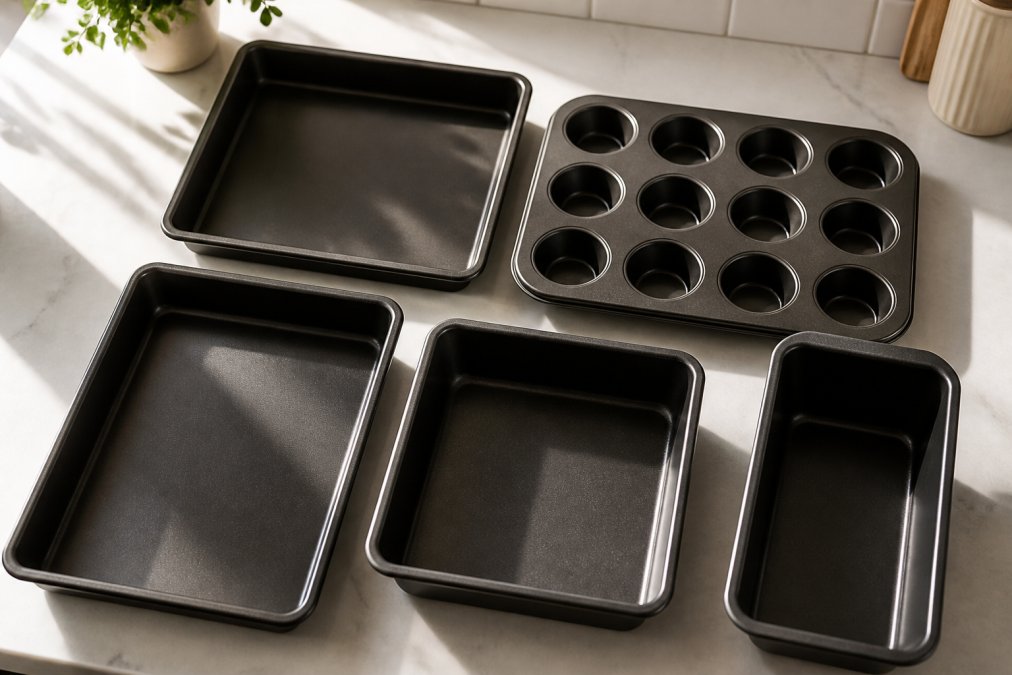
USA Pan Nonstick Half Sheet Pan: Best for Everyday Baking
The USA Pan Half Sheet is the most consistently reliable nonstick baking sheet at this price point. Its AMERICOAT silicone-based coating is PTFE-free and PFOA-free. The corrugated surface creates airflow channels beneath whatever you’re baking, translating to more even browning. Heavy-gauge aluminized steel construction resists warping even after years of regular use. Made in the USA.
Pros:
- Silicone-based AMERICOAT coating: PTFE-free, PFOA-free
- Corrugated surface improves airflow and browning consistency
- Heavy-gauge aluminized steel resists warping
Cons:
- Hand wash recommended to preserve coating longevity
Best for: Anyone who bakes cookies, roasts vegetables, or uses sheet-pan meals regularly.
Caraway Bakeware Set: Best for Non-Toxic Ceramic Performance
Caraway is the most complete non-toxic answer on this list. The ceramic-coated aluminized steel construction is free of PFOA, PTFE, and PFAS compounds. The set includes storage organizers that prevent pans from scratching each other. The 550°F oven-safe rating covers virtually every home baking scenario.
At $395 for a five-piece set, Caraway costs significantly more than most alternatives. But for bakers who want a complete, chemically clean bakeware set they don’t have to replace for years, the investment is defensible.
Pros:
- Ceramic coating: PFOA, PTFE, and PFAS free
- Included storage organizers prevent coating damage
- Consistent even baking performance
Cons:
- Higher price point than other options
- Hand wash only
Best for: Home bakers who prioritize non-toxic materials and want a cohesive, organized collection.
OXO Good Grips Non-Stick Pro Half Sheet: Best Mid-Range Pick
The OXO Good Grips Pro avoids compromising on either coating quality or structural rigidity. Commercial-grade heavy-gauge aluminized steel gives it warp resistance, and the ceramic-reinforced PTFE-free coating delivers clean food release without cooking spray. The micro-textured surface pattern improves airflow for more even baking.
Pros:
- Commercial-grade heavy-gauge aluminized steel
- Ceramic-reinforced, PTFE-free nonstick coating
- Micro-texture promotes even browning
Cons:
- Coating can scratch if abrasive tools are used
Best for: Bakers who want a serious workhorse pan without paying premium set prices.
GreenPan Premiere Ceramic Nonstick Half Sheet: Best for High-Heat Roasting
Most nonstick bakeware tops out around 450°F. The GreenPan Premiere is rated to 600°F, putting it in a different category for high-heat roasting and broiling. The PFAS-free ceramic coating handles that thermal range without degrading. The one-piece cast-aluminum body with integrated handles eliminates weak points where handles are attached separately.
Some users have reported chipping after heavy use. Ceramic coatings are harder than silicone-based alternatives but more brittle under impact.
Pros:
- Oven safe to 600°F, highest rating on this list
- PFAS-free ceramic coating
- One-piece cast-aluminum body with integrated handles
Cons:
- Some reports of chipping after heavy or careless use
Best for: Cooks who regularly roast at high temperatures or use the broiler setting.
Anolon Advanced Bronze 5-Piece Set: Best for Complete Kitchen Coverage
The Anolon Advanced Bronze set outfits an entire kitchen in one purchase. Heavy-gauge carbon steel construction across all five pieces delivers even heating and durable nonstick performance. Silicone grips on handles matter when pulling multiple pans from a hot oven. The 450°F oven-safe rating covers standard home baking.
The set is not dishwasher safe. Some buyers have noted occasional paint bubbling on the exterior finish, though the interior nonstick surface has not been the source of complaints.
Pros:
- Comprehensive five-piece coverage for varied baking tasks
- Silicone grips for secure handling
- Exceptional nonstick release performance
Cons:
- Not dishwasher safe
- Some exterior paint bubble reports
Best for: Home bakers setting up a complete kitchen or replacing an entire bakeware set at once.
Wilton Perfect Results Muffin Pan: Best Budget Pick for Batch Baking
The Wilton Perfect Results Muffin Pan delivers reliable performance at a price well below most competitors. Heavy-gauge steel construction keeps it dent-resistant, and the nonstick coating delivers clean muffin and cupcake release consistently. Muffins dome well and release cleanly without tearing.
This isn’t the pan for someone wanting the most durable coating, but the performance-to-cost ratio is hard to argue with.
Pros:
- Affordable entry point for reliable nonstick performance
- Even baking with good muffin dome formation
- Dent-resistant heavy-gauge steel
Cons:
- Some prefer heavier gauge construction
- Coating longevity improves with hand washing
Best for: Frequent muffin and cupcake bakers who want consistent results without significant investment.
Nordic Ware Naturals Half Sheet: Best Uncoated Option
The Nordic Ware Naturals Half Sheet has no nonstick coating. Natural aluminum construction delivers superior thermal conductivity and eliminates coating degradation as a concern. The reinforced encapsulated steel rim prevents warping under repeated high-heat cycling. Used with parchment paper or a silicone baking mat, this pan outperforms many coated alternatives for even browning. Made in the USA.
The aluminum surface reacts with acidic foods, causing discoloration. Always use parchment or a mat.
Pros:
- Superior thermal conductivity and even heat distribution
- No coating to degrade, chip, or replace
- Reinforced rim prevents warping
Cons:
- Requires parchment paper or silicone mat for nonstick properties
- Aluminum reacts with acidic foods
Best for: Bakers who prioritize pure baking performance and are comfortable using parchment paper consistently.
Ceramic vs Teflon Bakeware: Which Coating Should You Choose?
Ceramic coatings are mineral-based, free of PFAS compounds, and generally considered safer at high temperatures. PTFE-based coatings offer excellent food release and durability but carry concerns above 500°F.
For most home bakers, ceramic is the better default choice in 2026. The coating technology has matured significantly, and options like the GreenPan Premiere and Caraway set demonstrate that ceramic nonstick bakeware can match PTFE performance at standard baking temperatures while eliminating chemical safety concerns.
The tradeoff is brittleness. Ceramic coatings are harder than PTFE but more susceptible to chipping under impact. According to the FDA’s overview of food contact materials, PTFE itself is considered stable and inert under normal cooking conditions. The concern centers on manufacturing byproducts like PFOA, which most reputable manufacturers have eliminated.
Long-Term Coating Degradation: What to Expect After 1-3 Years
Year 1: Most quality coatings perform close to their out-of-box standard. Silicone-based and ceramic coatings both release food cleanly with minimal oil if hand-washed and stored without stacking.
Year 2: Ceramic coatings begin showing reduced release performance if exposed to repeated dishwasher cycles or abrasive sponges. Silicone-based coatings tend to hold up better.
Year 3: Any coating regularly dishwashed, scratched with metal utensils, or stacked without protection shows meaningful degradation. Pan longevity correlates more strongly with care habits than with initial coating quality.
Store nonstick bakeware with a folded dish towel between stacked pieces. Direct metal-on-metal contact is the fastest way to damage a nonstick surface, and most coating damage happens during storage, not baking.
How to Clean Nonstick Baking Pans Without Ruining the Coating
Hot water, a soft sponge, and mild dish soap are all you need for routine cleaning.
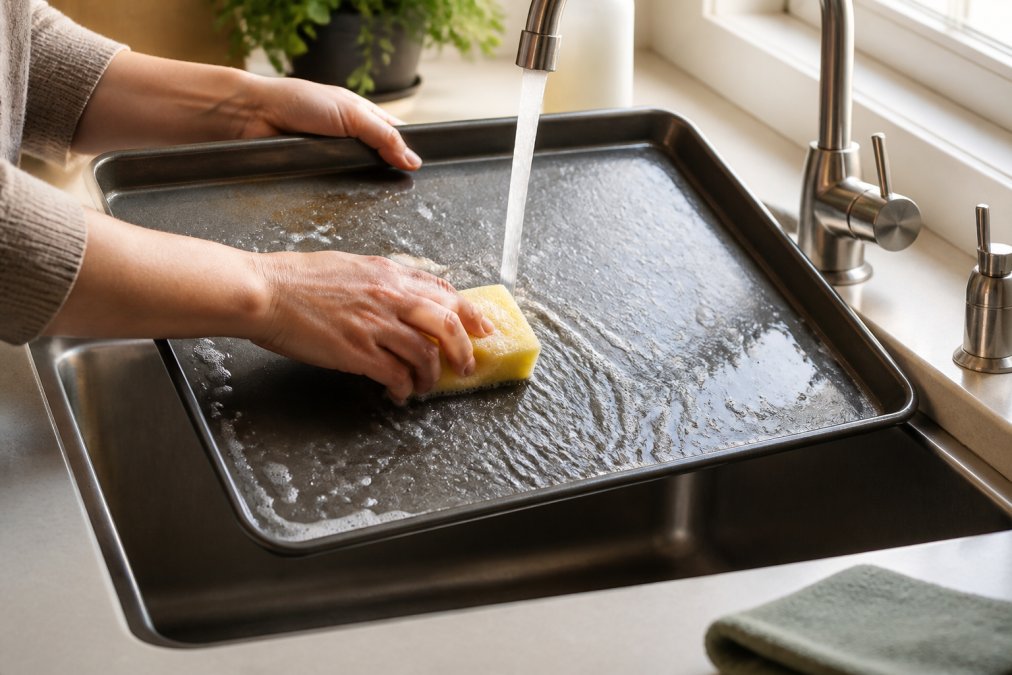
What damages nonstick coatings during cleaning:
- Abrasive scrubbers scratch the surface and accelerate degradation
- Dishwasher cycles break down both ceramic and silicone-based coatings faster than hand washing
- Soaking in standing water can compromise the bond between coating and metal
- Thermal shock from placing a hot pan in cold water can warp the pan and stress the coating
The right cleaning sequence:
- Let the pan cool completely before washing.
- Rinse with warm water to loosen residue.
- Apply mild dish soap to a soft sponge.
- Wipe in circular motions with light pressure.
- Rinse thoroughly and dry immediately with a clean towel.
For stubborn residue, soak the pan in warm soapy water for 15 minutes before washing.
Storage and Space-Saving Solutions for Bakeware
Most kitchen cabinets aren’t designed for bakeware, and stacking pans directly on top of each other is the most common cause of coating damage.
Practical storage options:
- Pan organizers: Vertical file-style organizers keep sheet pans separated and accessible without stacking.
- Pan protectors: Felt or silicone protectors placed between stacked pans prevent surface contact.
- Cabinet door racks: Over-door organizers use wasted space and keep pans visible and separated.
- Drawer dividers: Deep kitchen drawers with vertical dividers work well for half sheet pans stored on edge.
The Caraway Bakeware Set includes storage organizers as part of the package. For bakers building a collection piece by piece, aftermarket pan organizers solve the same problem at lower cost.
Oven Temperature Limits, Oven Compatibility, and When to Replace Your Pans
Oven temperature limits vary meaningfully across the pans on this list. The GreenPan Premiere leads at 600°F. Caraway and the Anolon set are rated to 550°F and 450°F respectively. Most silicone-based and ceramic-coated options perform best below 500°F.
Convection ovens: All pans on this list are compatible with convection settings. The corrugated and micro-textured surfaces on the USA Pan and OXO options work particularly well with convection airflow.
Broiler compatibility: Only the GreenPan Premiere is rated for direct broiler use at residential broiler temperatures.
When to replace your nonstick bakeware:
Replace when food begins sticking consistently despite proper greasing, the coating shows visible chips or flaking, the pan warps and no longer sits flat in the oven, or discoloration suggests the coating has been overheated. A pan that passes these checks is still serviceable regardless of age.
The oven temperature limit printed on a pan is a maximum, not a target. Baking at 25°F below the stated limit consistently extends coating life and reduces the risk of fume release from any coating type.
Which Nonstick Bakeware Set Should You Buy?
Buy the USA Pan Half Sheet if you want the most reliable everyday nonstick baking sheet under $30. The AMERICOAT silicone-based coating, corrugated surface, and heavy-gauge aluminized steel construction make it the best combination of safety, performance, and value.
Buy the Caraway Bakeware Set if non-toxic materials are your primary concern and you want a complete, cohesive set with included storage. The price is high, but the ceramic coating, even baking performance, and storage organizers justify it for committed home bakers.
Buy the OXO Good Grips Pro if you want a mid-range sheet pan that performs like a professional tool without the premium price. The commercial-grade construction and PTFE-free ceramic-reinforced coating offer the best value-to-performance ratio.
Buy the Nordic Ware Naturals if you’re willing to use parchment paper and want the purest baking performance available. No coating means no coating degradation, ever.
For home bakers who want professional-grade tools paired with the knowledge to use them well, bon COOK’s approach goes beyond selling bakeware. The Base & Bloom baking system and live virtual cooking classes twice monthly give you both the equipment and the technique to get consistent results.
As noted in Cook’s Illustrated’s methodology for testing bakeware, the most important variable in baking results is consistency, and consistency comes from understanding how your tools behave, not just owning good ones.
Frequently Asked Questions
What is the best nonstick bakeware for 2026?
The best nonstick bakeware depends on your priorities. For a PTFE-free, silicone-based coating with excellent warp resistance, the USA Pan Half Sheet Pan stands out. If you want a full ceramic-coated set free of PFAS, PFOA, and PTFE, the Caraway Bakeware Set delivers even heat distribution and easy food release. For budget-conscious bakers who still want reliable nonstick performance, the Wilton Perfect Results Muffin Pan and Cuisinart Chef's Classic set offer solid everyday results. Visit boncook.com for professional-grade options built for consistent baking performance.
Is ceramic or Teflon nonstick bakeware better for baking?
Ceramic coatings are PTFE-free and PFAS-free, making them the preferred choice for bakers concerned about chemical exposure. They handle high oven-safe temperatures well, with some rated up to 600°F. Traditional PTFE-based coatings (commonly called Teflon) tend to offer more consistent release performance in the short term but can degrade faster if overheated or scratched. For long-term use and peace of mind around material safety, ceramic or silicone-based nonstick coatings are the stronger choice in 2026.
How do I choose safe, non-toxic nonstick bakeware?
Look for bakeware labeled PFOA-free, PTFE-free, and PFAS-free. Ceramic-coated and silicone-based nonstick options meet these criteria. Check that the pan uses heavy-gauge aluminized steel or carbon steel for warp resistance and even heat distribution. Avoid pans with thin coatings that scratch easily, since a compromised surface is both a performance and a safety concern. Brands that clearly disclose their coating chemistry and oven-safe temperature limits are generally more trustworthy than those that don't.
What is the lifespan of high-quality nonstick bakeware?
A well-made nonstick baking pan typically lasts two to five years with proper care. Factors that shorten lifespan include using metal utensils on the surface, running pans through the dishwasher repeatedly, and exceeding the manufacturer's oven-safe temperature. Hand washing with a soft sponge, storing pans with protective liners between them, and avoiding cooking sprays that leave residue buildup all extend coating life. When food starts sticking consistently or the surface shows visible flaking, it's time to replace the pan.
Does nonstick bakeware need to be seasoned before first use?
Most nonstick bakeware does not require seasoning the way cast iron does. However, washing the pan with warm soapy water before first use removes any manufacturing residue. Some manufacturers recommend lightly wiping the interior with a small amount of neutral oil before the first bake to condition the surface. For ceramic-coated pans specifically, this light oiling can help maintain release performance over time. Always check the care instructions included with your specific pan, since recommendations vary by coating type.
Choosing quality nonstick bakeware is only half the equation. Getting consistent results requires knowing how to use it. bon COOK’s Base & Bloom baking system pairs professional-grade bakeware with structured technique guidance, and the twice-monthly live virtual cooking classes give you direct access to expert instruction. Visit boncook.com to explore the full bakeware collection and find the right tools for your kitchen.
This article was written using GrandRanker